

Search Engine Optimization (SEO) might seem like a mysterious art, but it’s actually a straightforward process of making your website more appealing to both search engines and users. When someone searches for “best pizza recipes” or “digital marketing services,” Google decides which websites to show first based on hundreds of factors. Understanding and optimizing for these factors is what SEO is all about.
What Is SEO and Why Does It Matter?
SEO is the practice of improving your website to increase its visibility when people search for products or services related to your business on Google and other search engines. The better visibility your pages have in search results, the more likely you are to attract prospective customers.
Consider this: 75% of users never scroll past the first page of search results. If your website appears on page two or beyond, you’re essentially invisible to most potential visitors. This is why ranking higher on Google can dramatically impact your business success.
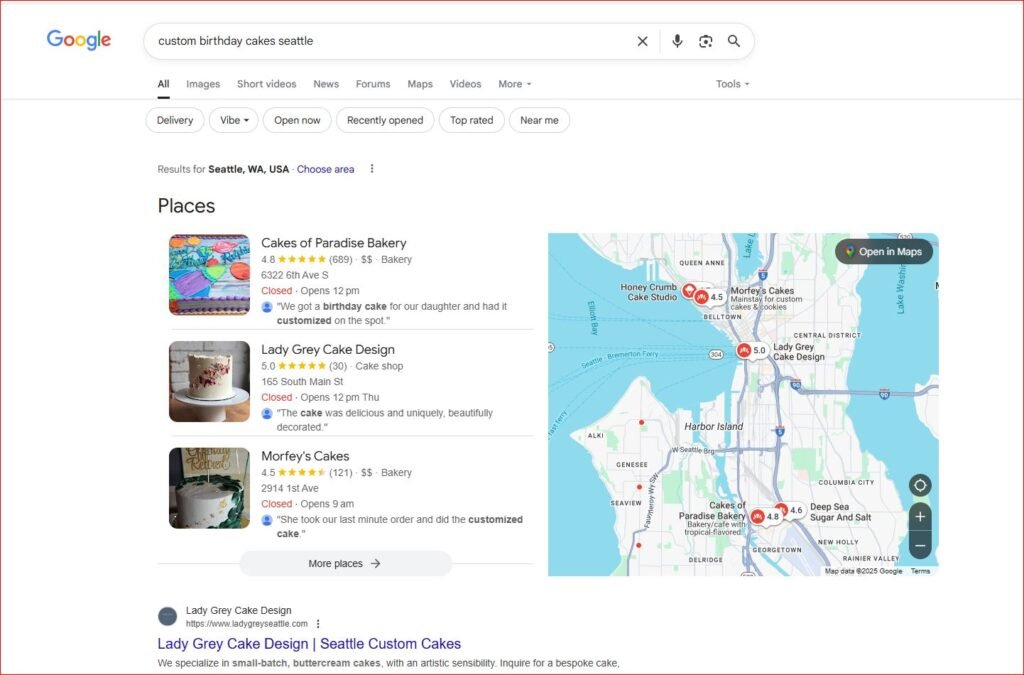
Real Example: A local bakery in Seattle optimized their website for “custom birthday cakes Seattle” and saw their online orders increase by 300% within six months, simply by moving from page 3 to position 2 on Google.
How Google Decides What to Show First
Google’s algorithm considers over 200 ranking factors, but they fall into three main categories:
Content Quality and Relevance
Google wants to show users the most helpful, accurate, and comprehensive content. It analyzes your content to understand what it’s about and whether it matches what people are searching for.
Authority and Trust
Google evaluates how authoritative and trustworthy your website is, primarily through backlinks from other reputable sites and user engagement signals.
User Experience
Google prioritizes websites that load quickly, work well on mobile devices, and provide a smooth browsing experience.
The Foundation: Keyword Research
Before writing any content, you need to understand what your target audience is actually searching for. Keyword research is like market research for SEO – it tells you what topics to focus on and how people phrase their searches.
How to Find the Right Keywords
Start with seed keywords related to your business. If you run a fitness blog, your seed keywords might be “workout,” “fitness,” “exercise,” and “nutrition.” Then expand these using tools like:
- Google’s Search Suggestions: Type your seed keyword into Google and see what auto-complete suggestions appear
- “People Also Ask” sections: These show related questions people search for
- Related searches: Found at the bottom of Google search results pages
Concrete Example: A yoga studio owner discovered that while “yoga classes” gets 10,000 monthly searches, “beginner yoga classes near me” only gets 500 searches but has much higher conversion potential because it shows clear intent to attend classes.
If you’re considering expert support, you might want to partner with an agency to craft a winning SEO strategy. In that case, check out our article: How to Pick the Best SEO Agency for Your Business in 2025.
Understanding Search Intent
Not all keywords are created equal. Understanding search intent – what the user actually wants to accomplish – is crucial:
- Informational: “How to do a push-up” (seeking knowledge)
- Navigational: “Nike official website” (looking for a specific site)
- Commercial: “best running shoes 2025” (researching before buying)
- Transactional: “buy Nike Air Max online” (ready to purchase)
Match your content type to the search intent. For “how to do a push-up,” create a detailed tutorial with images or video. For “buy Nike Air Max online,” ensure your product pages are optimized.
On-Page SEO: Optimizing Individual Pages
On-page SEO involves optimizing elements on your website that you have direct control over. Here’s how to do it effectively:
Title Tags and Meta Descriptions
Your title tag is like a book’s title – it tells both users and Google what your page is about. Keep it under 60 characters and include your target keyword naturally.
Good Example: “Easy Chocolate Chip Cookie Recipe | Ready in 30 Minutes” Poor Example: “Cookies | Baking | Desserts | Sweet Treats | Kitchen Recipes”
Meta descriptions don’t directly impact rankings but influence click-through rates. Write compelling 150-160 character descriptions that encourage clicks.
Example: “Learn to bake perfect chocolate chip cookies with our foolproof recipe. Crispy edges, chewy centers, ready in just 30 minutes with ingredients you already have.”
Header Structure (H1, H2, H3)
Use headers to organize your content logically. Your H1 should contain your main keyword and clearly describe what the page is about. Use H2s for main sections and H3s for subsections.
Example Structure for a Recipe Blog:
- H1: “The Ultimate Chocolate Chip Cookie Recipe”
- H2: “Ingredients You’ll Need”
- H2: “Step-by-Step Instructions”
- H3: “Preparing the Dough”
- H3: “Baking Tips for Perfect Results”
- H2: “Storage and Serving Suggestions”
Content Optimization
Write comprehensive, helpful content that thoroughly covers your topic. Google favors content that provides complete answers to user questions.
Example: Instead of writing a 300-word article about “email marketing tips,” create a comprehensive 2,000-word guide covering strategy, tools, best practices, examples, and common mistakes. This comprehensive approach often leads to higher rankings.
Use your target keyword naturally throughout the content, but avoid keyword stuffing. Include related terms and synonyms – Google understands context and semantic relationships between words.
Internal Linking
Link to other relevant pages on your website to help users navigate and to distribute page authority throughout your site.
Example: In your chocolate chip cookie recipe, link to related articles like “The Science of Perfect Cookie Texture” or “10 Cookie Decorating Ideas.” This keeps users on your site longer and helps Google understand your site’s topic clusters.
Technical SEO: The Behind-the-Scenes Foundation
Technical SEO ensures search engines can properly crawl, index, and understand your website. While it might sound complex, focusing on these key areas will cover most of your technical SEO needs:
Page Speed Optimization
Google considers page loading speed as a ranking factor, especially for mobile searches. Users expect pages to load in 3 seconds or less.
Practical Steps:
- Compress images (a 2MB image can often be compressed to 200KB without visible quality loss)
- Enable browser caching
- Use a Content Delivery Network (CDN)
- Minimize CSS and JavaScript files
Real Example: An e-commerce site reduced their product page load time from 8 seconds to 2 seconds and saw their conversion rate increase by 35% while also improving their search rankings.
Mobile-Friendliness
With Google’s mobile-first indexing, your mobile version is now considered the primary version of your site. Ensure your website works perfectly on smartphones and tablets.
Test your site’s mobile-friendliness using Google’s Mobile-Friendly Test tool. Common issues include text that’s too small to read, clickable elements too close together, and horizontal scrolling.
SSL Certificate (HTTPS)
Google has confirmed HTTPS as a ranking signal. Websites with SSL certificates (showing the padlock icon in browsers) are considered more trustworthy and secure.
Site Structure and Navigation
Create a logical site structure that makes it easy for both users and search engines to find content. Use descriptive URLs like “yoursite.com/chocolate-chip-cookie-recipe” instead of “yoursite.com/page123.”
Off-Page SEO: Building Authority and Trust
Off-page SEO primarily involves earning backlinks from other websites. Think of backlinks as votes of confidence – when another site links to yours, it’s essentially saying your content is valuable and trustworthy.
Quality Over Quantity
One high-quality backlink from a reputable site in your industry is worth more than dozens of low-quality links from irrelevant or spammy sites.
Example: A backlink from the Food Network to your recipe blog carries much more weight than 50 backlinks from random, unrelated websites.
Earning Backlinks Naturally
The best backlinks come naturally when you create exceptional content that others want to reference and share. Here are proven strategies:
Create Link-Worthy Content:
- Original research and surveys
- Comprehensive guides and tutorials
- Infographics and visual content
- Industry insights and expert opinions
Real Example: A digital marketing agency created an original study about social media usage trends. The study was cited by 50+ industry blogs and news sites, earning valuable backlinks and establishing the agency as a thought leader.
Guest Posting: Write valuable content for other websites in your industry. This helps you reach new audiences while earning backlinks to your site.
Resource Page Link Building: Many websites have resource pages linking to helpful content in their industry. If you’ve created comprehensive, valuable content, reach out to suggest your resource for inclusion.
Local SEO for Local Businesses
If you have a physical location or serve specific geographic areas, local SEO is crucial for attracting nearby customers.
Google My Business Optimization:
- Claim and verify your Google My Business listing
- Keep business information accurate and up-to-date
- Encourage customer reviews and respond to them
- Post regular updates and photos
Local Keywords: Optimize for location-specific keywords like “dentist in Portland” or “pizza delivery Chicago downtown.”
Example: A local plumber optimized for “emergency plumber [city name]” and “water heater repair [city name],” resulting in a 250% increase in service calls within three months.
Measuring SEO Success: Key Metrics to Track
SEO is a long-term strategy, and measuring success requires tracking the right metrics over time:
Organic Traffic
Monitor how many visitors come to your site from search engines. Use Google Analytics to track organic traffic trends and identify which pages are performing well.
Keyword Rankings
Track where your target keywords rank in search results. While rankings can fluctuate, the overall trend should be upward over time.
Click-Through Rate (CTR)
Monitor your CTR in Google Search Console. If your pages rank well but have low CTR, you may need to improve your title tags and meta descriptions.
Conversion Rate
Ultimately, SEO success should translate to business results. Track how many organic visitors take desired actions like making purchases, signing up for newsletters, or contacting your business.
Example: An online course creator tracked their SEO progress and found that while their “digital marketing course” keyword moved from position 15 to position 5, their conversion rate for organic traffic increased from 2% to 8% because they were attracting more qualified visitors.
Common SEO Questions Answered
How Long Does SEO Take to Work?
SEO is a marathon, not a sprint. You might see small improvements in 4-6 weeks, but significant results typically take 3-6 months for new websites and 1-3 months for established sites. Competitive keywords in popular industries may take even longer.
Is SEO Worth the Investment?
Absolutely. Unlike paid advertising, SEO creates lasting results. Once you rank well for important keywords, you continue receiving traffic without ongoing ad spend. Studies show SEO leads have a 14.6% close rate compared to 1.7% for outbound leads.
Can I Do SEO Myself?
Basic SEO can definitely be done yourself, especially for small businesses and personal websites. Focus on creating great content, optimizing your pages properly, and building relationships in your industry for natural backlinks. However, larger businesses or highly competitive industries may benefit from professional SEO services.
How Often Should I Update My Content?
Google favors fresh, updated content. Review and update your most important pages every 6-12 months. Add new information, update statistics, and ensure all information remains accurate and relevant.
What’s the Difference Between SEO and SEM?
SEO (Search Engine Optimization) focuses on earning organic (free) search traffic through optimization techniques. SEM (Search Engine Marketing) includes both SEO and paid search advertising (like Google Ads). Both are valuable, but SEO provides longer-lasting results while paid ads provide immediate visibility.
Getting Started: Your SEO Action Plan
Ready to improve your Google rankings? Here’s a practical action plan:
Week 1-2: Foundation
- Research 10-15 relevant keywords for your business
- Audit your current website for basic technical issues
- Set up Google Analytics and Google Search Console
Week 3-4: On-Page Optimization
- Optimize title tags and meta descriptions for your most important pages
- Improve your content structure with proper headers
- Add internal links between related pages
Month 2: Content Creation
- Create one comprehensive, helpful piece of content targeting your most important keyword
- Start building a content calendar for regular publishing
Month 3 and Beyond: Authority Building
- Begin outreach for guest posting opportunities
- Create link-worthy resources like guides or tools
- Consistently publish valuable content
- Monitor your progress and adjust your strategy based on results
Remember, SEO success comes from consistently providing value to your audience while following best practices. Focus on creating content that genuinely helps people, and the rankings will follow. The websites that rank highest on Google aren’t necessarily the ones with the most technical optimization – they’re the ones that best satisfy user needs and provide exceptional value.
Start with the basics, be patient with the process, and always prioritize your users’ experience over gaming the system. Google’s algorithm continues to evolve, but websites that focus on quality, relevance, and user satisfaction will always have an advantage in search results.
Need help implementing SEO for your site? Contact Linkbly SEO Agency – we’ll help you rank better, faster.